Best AV Receivers for 2024
Check out our picks of the best AV receivers from Onkyo, Sony, Yamaha, Denon and Marantz.
Our Experts


- Ty was nominated for Best New Journalist at the Australian IT Journalism awards, but he has only ever won one thing. As a youth, he was awarded a free session for the photography studio at a local supermarket.
What to consider
Channels
HDMI inputs
Dolby Atmos capability
Wi-Fi music streaming
Our Picks
A movie theater may still be the best place to catch a movie, thanks to the stunning picture and immersive sound. But you can't always watch the latest blockbusters on the big screen. You can, however, bring some of that big-screen magic to your home -- with an AV receiver. The best models come equipped with 8K video, Dolby Atmos and Wi-Fi music streaming capabilities. The detailed specs can make shopping for one a bit daunting, though. CNET is here to help, and we've rounded up the best AV receivers you can buy right now.
What is the best AV receiver overall?
So, which is the best AV receiver for you? I've tested the most popular models between $500 and $2,000 to help you find the best AV receivers 2024 has to offer.
If you divide your time between watching TV and listening to music, there are several models that can do both well, including two excellent Onkyo receivers in the TX-NR6100 and TX-RZ50. The recently reviewed Sony STR-AN1000 is also a strong performer under $1,000, though it isn't quite as well specified as its competitors.
Best AV receivers of 2024
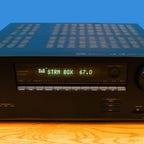
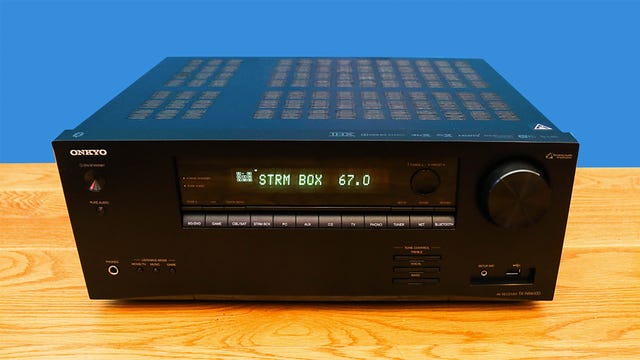
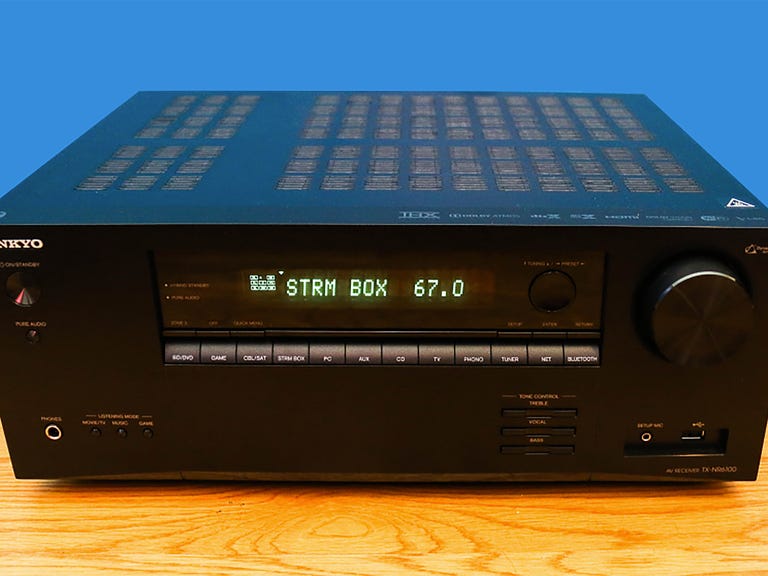
The TX-NR6100 is the follow-up to my favorite receiver of the past few years, the Onkyo TX-NR696. Like its predecessor, the NR6100 offers great sound and a wealth of connectivity (including 4K/120Hz support for gaming consoles). Streaming options include Chromecast built-in, DTS Play-Fi, Spotify Connect, Sonos, AirPlay and Bluetooth. With a bit more power than the Sony STR-AN1000 and a keener price than any competitor, the Onkyo TX-NR6100 is the best receiver value under $1,000. At the time of writing the receiver is selling for $481 at Amazon which is an amazing deal.
Best receiver for gaming
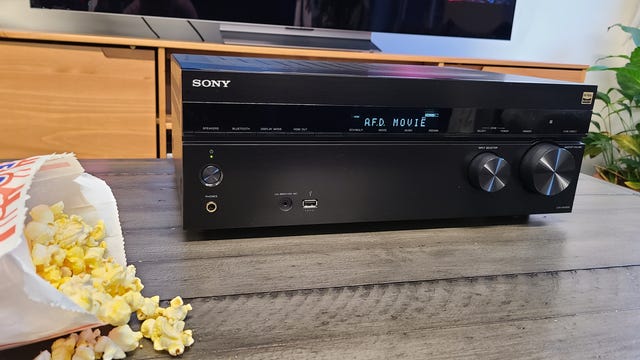
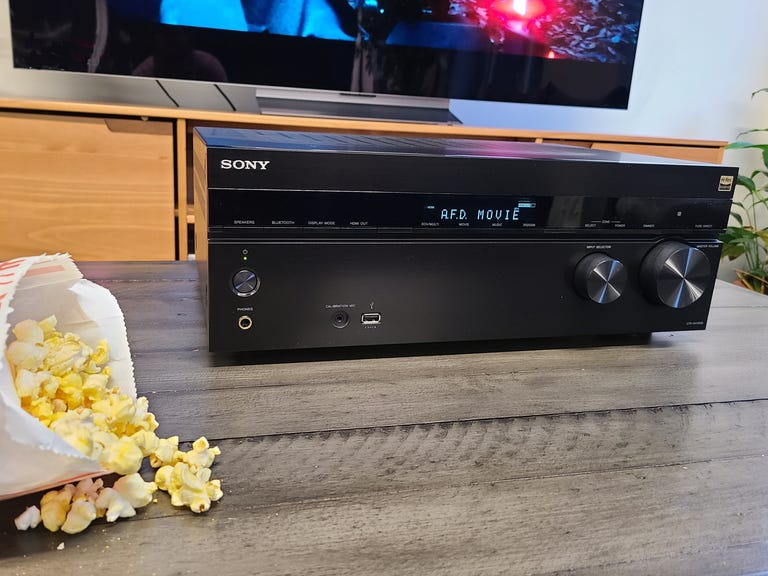
Sony STR-AN1000
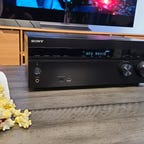
Sony went away for a couple of years, but came back better than ever with the STR-AN1000. This model offers all of the latest features including HDMI 2.1 (4K/120Hz) support. It includes "works with Sonos" certification, but the reason to buy it is that it's a solid performer. It also has one of the most sophisticated setup routines yet, so dialing in great sound is even easier.
Best receiver under $1,600
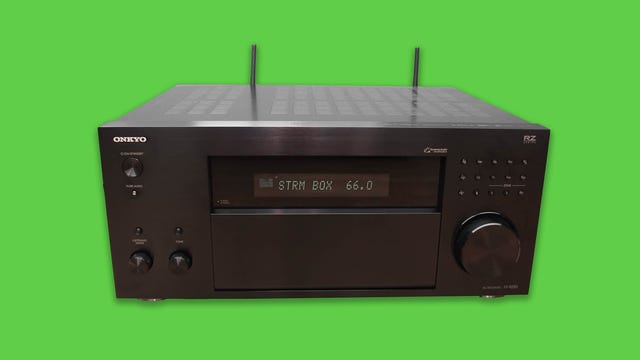
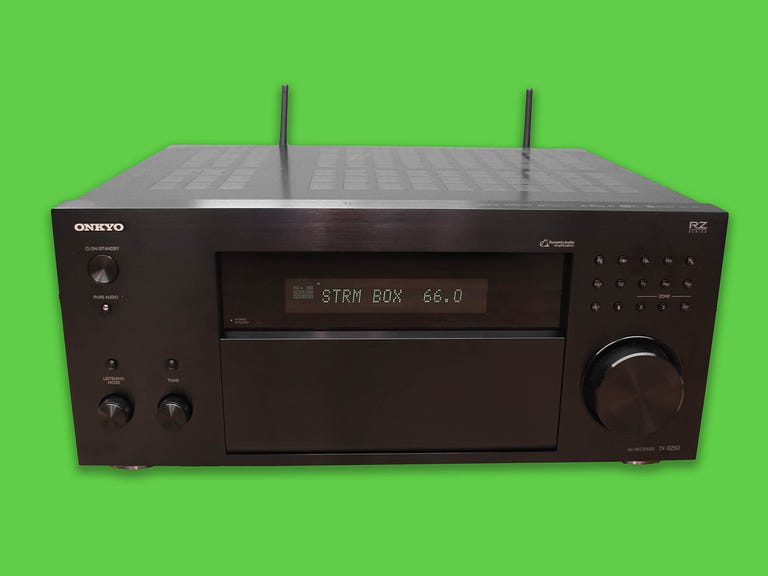
Onkyo TX-RZ50
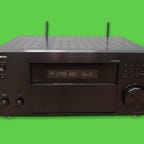
Onkyo's TX-RZ50 is a perfect step-up model for those looking to upgrade their systems for a set of better-quality speakers or to add a turntable. Like its budget-oriented label mate, the TX-NR6100, it's stacked with features including the audiophile-level calibration called Dirac Live, as well as the best streaming suite offered in an AV receiver. On that point, being able to request songs directly from Google Assistant or Amazon Alexa is a real boon.
What improvements does the $1,200 TX-RZ50 offer over the $500 TX-NR6100? Firstly, it offers double the number of 8K compatible inputs (six versus three) plus it boasts more power (120 watts versus 100 watts). It also has two-way Bluetooth for streaming as well as listening on wireless headphones.
The TX-RZ50's performance was excellent whether listening to streamed music, or watching a movie: I hadn't heard Dolby Atmos sound this convincing in a long time. The addition of Dirac Live adds its own complexities in setup -- please, only use the Onkyo Controller mobile app in combination with the supplied microphone -- but doing so rewards with a highly involving performance.
Be aware the Onkyo is often out of stock, but as an alternative the Yamaha RX-A4 is even better with movies.
Best receiver for movies
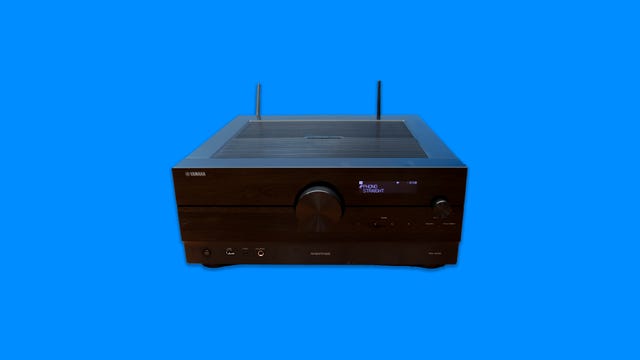
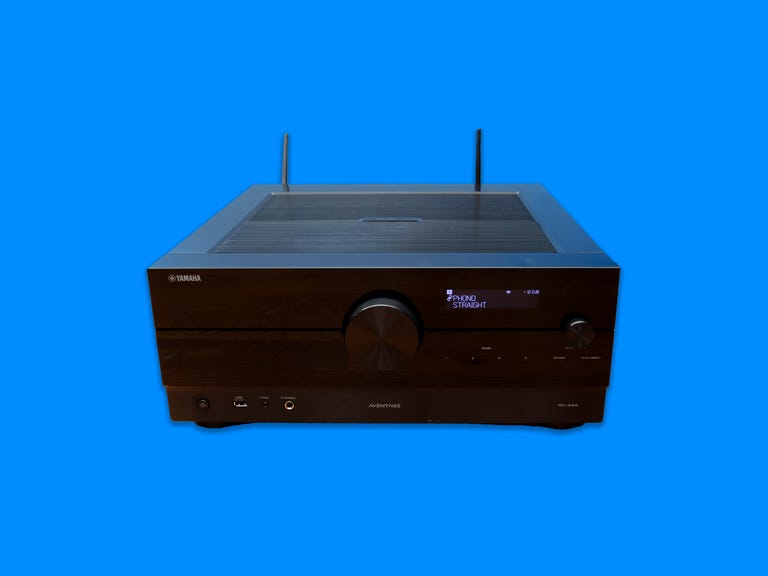
Yamaha RX-A4A
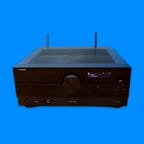
I'm a big fan of the Yamaha RX-V6A, so I was curious to see what the step-up RX-A4A brings to the table. As it turns out, this Yamaha offers even better build quality and a huge cinematic sound.
Look through the fancy top grille and you'll see neatly packed components and a distinguished, stamped transformer. The system is capable of a beefy 110 watts per channel (stereo) and has seven HDMI ports for your connectivity needs.
I tested the Yamaha A4A against the Onkyo RZ50 and the Denon X3700. The Yamaha's sound quality tended toward the cinematic rather than the musical and offered a big, roomy sound perfect for blockbusters or moody conspiracy thrillers. What was surprising is that the onboard phono preamp was even better than the one on the rival Onkyo RZ50, so I can recommend it for people who don't want a separate preamp for their turntable.
The Yamaha is great with movies but doesn't sound as good with music streaming. Still, as the Onkyo offers balanced performance across both, it's my current favorite.
Which receiver should you buy?
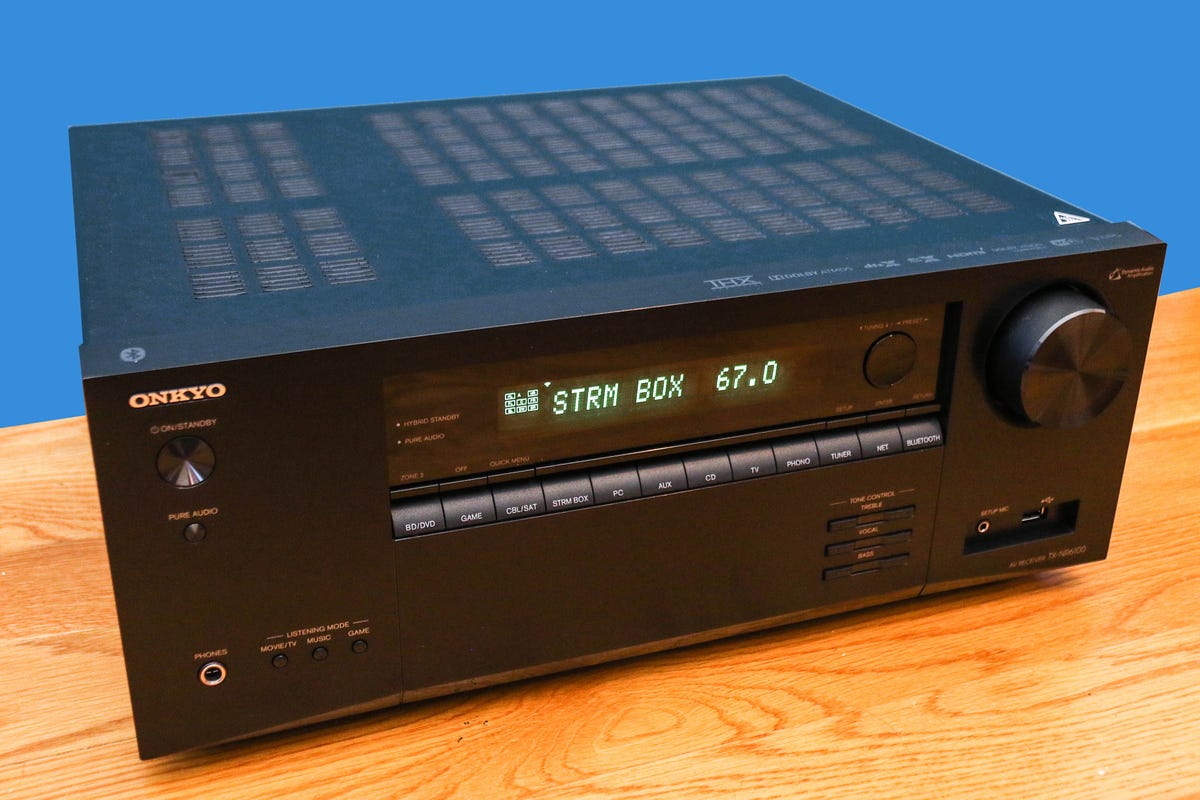
The Onkyo TX-NR6100 is the best receiver for most needs
If you're spending under $1,000, there are four main receivers to choose from -- the Sony STR-AN1000, the Yamaha RX-V6A, the Onkyo TX-NR6100 and the Denon AVR-960H. All offer excellent performance, so the short answer about which to buy is whichever is available for the lowest price. At the moment, that is either the Denon or the Onkyo, which are both on sale for under $600 as I type this. I especially recommend the Onkyo TX-NR6100 for its combination of excellent performance and connectivity. The Onkyo offers easy setup, excellent usability, solid looks and useful features, including the best streaming suite alongside Sony. As an added plus, the Onkyo was never prone to the 4K issue that plagued early versions of the Yamaha RX-V6A.
Meanwhile, the step-up Onkyo TX-RZ50 is an excellent receiver if you're looking for the next level of features and a performance bump over sub-$1,000 models. It offers an excellent, if slightly scary, calibration routine from Dirac Live and the best number of streaming features on the market. It sounds great with music and movies alike.
Lastly, if it's home theater thrills you're after, the Yamaha RX-A4A offers crisp, dynamic sound and fantastic build quality for $1,300.
Factors to consider when buying an AV receiver
AV receivers are notoriously complex, with reams of features and confusing technical specifications. (For example, what's 4K/120Hz anyway?) Yet, what are the things that really matter when buying a new model? I'm going to sum up the most important ones right here.
HDMI inputs
With most TVs and set-top boxes supporting HDMI, you should buy a receiver that has as many of these HDMI input ports and outputs as possible. Front-mounted HDMI ports are kind of like an appendix -- unneeded, because most users don't hot-plug HDMI devices -- making the number of rear inputs what's most important. (How else are you going to connect your Roku, Blu-ray player, Nintendo Switch and all your other devices?) The Onkyo TX-NR6100 has six rear-mounted HDMI inputs, while the Denon AVR-S960H and Yamaha RX-V6A go one better with seven. If you want to connect two different displays -- a TV and a projector, for example -- all but the Yamaha offer a second HDMI output. You should also be sure you have an extra HDMI cable or two on hand -- these things are like the second sock of a pair in that you can never find them when you need them.
Dolby Atmos capability
Most receivers in the $500-and-above price range include Dolby Atmos capability and DTS:X, but the effect they have on your home theater movie-watching can be subtle, or in most movies, nonexistent. In other words, don't worry about missing out on these formats if you don't install an extra height speaker or two. Mounting your rear surround speakers high on the wall will get you halfway there in terms of quality, immersive sound.
WiFi music streaming
Most midrange receivers have onboard Wi-Fi network connectivity for wireless music streaming through your speaker system. There are plenty of standards for wireless streaming services, but the most universal are Spotify Connect, Apple AirPlay 1 and 2 and Google Chromecast built in. If you're looking to build a multiroom system with a variety of AV systems and speakers with wireless connectivity, these are the three flavors to aim for. Onkyo and Sony are the only devices to support all three. The Denon receiver model lacks wireless streaming via Chromecast, but ups the ante to AirPlay 2 and the proprietary HEOS system. Meanwhile, Yamaha has its own MusicCast system.
How CNET tests AV receivers
At CNET we test audio equipment from compact soundbars though to surround sound systems, but regardless of the device my methodology is essentially the same. I always compare products against one or more reference devices that offer the best performance at a similar price.
When it comes to receivers I want to see how well a system performs with music and movies, as most people will want to do both. I watch some test scenes from 4K Blu-ray or streamed from a 4K streaming service (Vudu, for example) and evaluate aspects such as Dolby Atmos surround performance and dialog clarity. I also use several test music tracks and evaluate streaming features such as Bluetooth and Wi-Fi. Systems that can perform well with both types of entertainment inevitably score the highest.
Check out CNET's receiver buying guide for more about the features and things you should consider when looking for a new system.
Other AV receivers we tested
- Yamaha RX-V6A ($600, save $150): This Yamaha RX-V6A offers a fresh look at AV receiver design, with its futuristic edges and simple controls, while maximizing sound quality. The Yamaha might even make you forget about visiting a cinema ever again, and it's no slouch with music, either. It offers plenty of connectivity with Wi-Fi bringing AirPlay 2, Spotify Connect, Bluetooth and Yamaha's MusicCast system for streaming from your devices. Notably, the TSR-700 is identical -- it's an exclusive model for some outlets -- and you can find it for $400 here at Amazon. Find out more in CNET's Yamaha RX-V6A review.
- Marantz SR6015 ($1,479, save $250): The Marantz SR6015 does everything you'd expect -- Dolby Atmos, music streaming, 4K/120Hz throughput -- and with a good deal of aplomb. It sounds great, but it's not as flexible as the best receivers here -- for instance, you can't watch a video source while listening to music, like the Onkyos can, and neither can you ask a Google Nest to play a song on it. The Marantz SR6015 has been replaced by the Cinema 500 but the original is currently selling out for $1,000 less than its retail price.
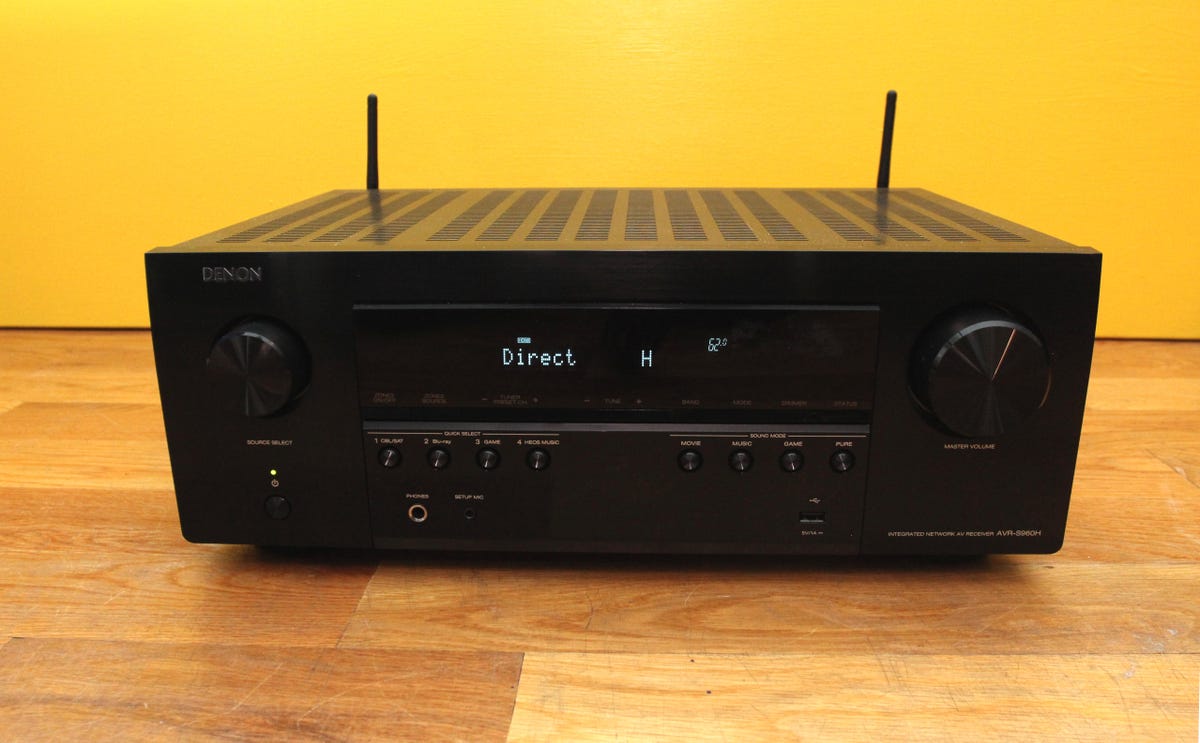
The Denon AVR-S960H
AV receiver FAQs
What is the difference between a stereo receiver and an AV receiver?
Should I buy an 8K receiver?
How do I connect my TV to my AV receiver?
Is 4K/120Hz support a big deal?
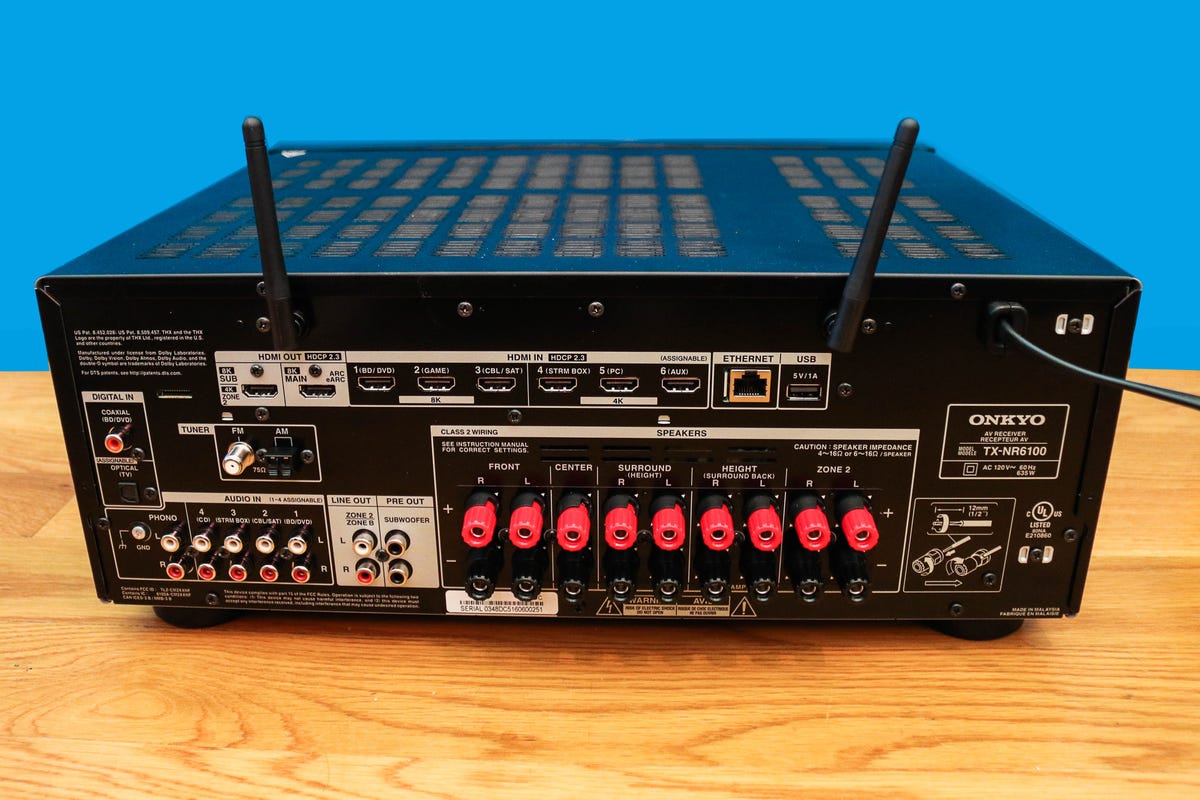
The rear panel of the TX-NR6100 offers 6 HDMI inputs and 2 outputs