Big Screen Buyers' Guide: UPDATE

By Randolph Ramsay on 26 February 2007

Tags: big | buyers | buying | crt | guide | lcd | plasma | projection | questions | rear | right | screen | tips | tv

6. What about widescreen?
We know that most television programming is still being broadcast in the traditional 4:3 box format, and that may tempt you to look for non-widescreen televisions. But consider the fact that almost all DVDs playback their movies in widescreen, and that more and more television is being shown in that format as well thanks to digital broadcasts, and the case for getting a widescreen television becomes much stronger.

7. What do I want to plug into my new television?
Gone are the days where all you needed to plug into a TV was a video player and your antenna. Before you start your TV trek, you need a list of what types of other equipment you'll want to plug into your proposed new screen to make sure that firstly, it has the right inputs, and secondly that there are enough inputs to accommodate all your gear. Gear you'll probably want hooked up includes DVD recorders, video players, game consoles, digital set top boxes, or even things like photo printers and handheld multimedia devices (like a camcorders). Of course, you may want an AV receiver to be your input centre instead, but it won't hurt to have a big screen with an extensive array of connections.

Check if the television you're considering has HDMI capabilities.

The types of connectors a screen sports are also important. The most advanced and future-proof connections are the all-digital HDMI ports that can carry high definition video and several digital audio channels all on the one cable. You should also look for at least one component connector (for the best analogue video signal), along with some S-Video and composite ones -- for connecting devices like camcorders and cameras on an ad-hoc basis, these ports should be in accessible locations on the side or front of the television panel.

8. What other accessories will I need?
In 2006, most major manufacturers finally introduced flat panel televisions with built-in high definition tuners, so you may no longer have to hook up an external box to receive free-to-air high definitions signals. Be aware, however, that these models are still at the top end of most ranges, and many budget big screens out there are cheaper precisely because they only offer an analogue tuner (and probably lower resolution). Depending on the shows you want to watch, buying an external digital set top boxes may still be a good option, as they can be added for as little as AU$120. But upgrading from SD to HD, and added extras such as a hard drive for recording TV shows, can push the price of a STB to more than AU$1500.

Although most televisions come with built-in speakers, the sound output rarely matches the picture quality standards. For a better home theatre experience with surround sound, you should also shop for a 5.1 speaker system.

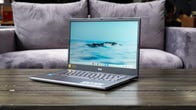
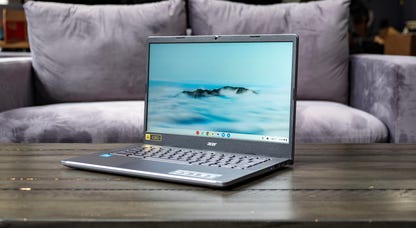
Big screens such as this LCD from Acer are becoming cheaper every day.

9. How much do these things cost?
The good news is that big screen televisions are becoming cheaper every day. The cheapest 42-inch plasma TVs are now well and truly below AU$2000 -- street sales prices are even better. Of course these are not the latest and greatest models; large plasmas with 1080p resolutions can soar up to AU$17,449 for a big 65-inch screen.

Even though LCDs are still slightly more expensive than plasmas on a per inch basis, the disparity is diminishing. Today, 40-inch LCDs carry RRPs from as low as AU$2699. Again these models have lower specifications, but even 40-inch 1080p LCD offerings are in the AU$5000 range.

Rear projection televisions, if you have the space, may represent the best value of all. Some 56-inch models are under AU$3000, while giants up to 72-inches can be found for less than AU$6000.

10. If big screen TVs are getting cheaper all the time, shouldn't I just wait for prices to fall further?
Fair point, and it's one that could be made for almost any technology purchase. With big screens becoming cheaper to make as more and more consumers buy them, prices falling further are a certainty. But holding off won't get that television into your living room, and as long as you make an informed decision about the type of big screen that's right for you then it's money well spent. Besides, no matter how much you pay for your big screen now, it's still nowhere near as much as what someone paid for the same thing 12 months ago.

Like this article? Click below to send it to your mobile for free!

Tom Holzel
28/11/2005 12:12 PM

Have you ever noticed how so many display gurus tell you a lot about flat panels, but never make any judgement calls? Most are afraid to offend a potential sponsor or client, or suffer from excessive PC (in which it is never polite to call a spade a spade--too "direct"). Here is Velocity Associates' straigh skinny. COSMIC CAVEAT: Do not, repeat, not buy last year's model of any big screen TV. This is a very rapidly evolving market, technology-wise, and the changes from one year to the next are still substantial. There will be many tempting close-out specials. Don't bite. If you must buy now, you can choose between plasma, LCD, front projection & the new slender (18-inches deep) reap projection systems. 1. Plasma (called PDPs) are the cheapest flat-panel systems and are currently the best today for any sports viewing because they have no motion lag. They are also the biggest, and large size is very important. (Most people who bought smaller big screens wish they had gotten a larger size.) There is an un-examined, un-discussed "Big Screen Effect." This is the strong human preference for larger images over smaller ones--even if the smaller ones appear sharper and brighter. 42-inches is the smallest I'd consider. It requires moderately subdued lighting for best picture quality. (But none compare for impact with a 100+ inch image.) 2. But, PDPs aren't good at showing HDTV, so I would not buy one today, any more. They are also power-hungry and run hot. They should not be used at all for showing computer imagery as they will slowly burn-in static images--although this is much improved in the latest models. 3. LCDs look great in higher ambient light but all today suffer from motion blur, and they generally don't come larger than 37-inches, kind of too small for the impact you want. But, next year, some LCDs will come out with--finally--a reliable sharpness enhancement that actually works. (See "Aptura" LCD, above.) This sharpness enhancement removes one of the two LCD "don't buy it" factors. The other is a size limit, but maybe they'll also come out with a larger--at least 42-inches, version. If available in native HDTV, i.e. at least 1080 X 780, and you can afford it--go for it next fall. 4. The other two considerations are front and rear projectors. Front projectors in HDTV go for around $3500 and will give you a whopping image size--which looks really great and impactful--just like being in the movies. But you need a substantially darkened room--but if you have one, it's a great theatrical experience. You'll also want at decent, high-powered hi-fi along with it. The Sanyo Z-4 is making big waves in this arena at a street price of around $2300. 5. But consider also the LCOS or DLP rear-projection systems. They're only 18-inches deep and also in the $3000 range. They offer excellent picture quality at a decent size in HDTV. The only quibble here is they come in two versions--single light engines (using field sequential color) and multiple (usually 3) light engines. The single light engine version cause some people to see occasional color flashes, depending on how sensitive they are to flicker. I am very sensitive to flicker and do not enjoy watching single-engine RP (rear projection) products, but other people enjoy them just fine. Blink your eyes rapidly while watching one to see if you experience occasional color flashes. One additional nice feature of the LCOS or DLP systems is that the pixel fill is around 90%, so there is no chicken-wire effect, such as you get with PDPs, or even LCDs if you move up too close. Single-engine front projectors don't usually run into the color flashing problem because they are much dimmer in large screen sizes. Remember, theater motion pictures are only 10 fL bright--not really bright enough to stimulate your flicker sensitivity. (A modern TV is 150 fL.) In a dark room, a very big image can be as dim as 2-3 fL and still be very satisfying (think driv

Report offensive content

Ron Smith
13/01/2007 06:49 AM

I found this Web Site excellent. It gave me all the information I was looking for in looking for a TV. I wanted to know the difference between LCD and Plasma and HD, Pixels, It covers everything you need to know before you make that final decesion buying a TV. Thankyou and I will pass it on to all my friends.

Report offensive content

sonny
02/06/2008 08:25 PM

very helpfull thanks

Report offensive content

tintin
27/07/2008 12:42 PM

i went to get an lcd tv. we were just about to buy it when the man said we needed this projector for the full sound and picture. it's very expencive and i am confussed

Report offensive content

  • Leave a comment

All fields marked with * are required

What do you think

Your e-mail will not be displayed

You must read and type the 6 chars within 0..9 and A..F

You must read and type the 6 chars.


  • Commercial networks could win sport on digital

  • Panasonic Viera TX-37LZ800M

  • Sony Bravia KDL32V4000

  • Plasma TV on the rebound?

  • Panasonic Viera TH-50PZ850A

  • HD Olympics: A look behind the scenes

  • Best 1080p televisions

  • How Seven blew the internet Olympics

  • Samsung LA40A650

More articles »

Product finder

The Explain Series

  • Panasonic Viera TX-37LZ800M

    Panasonic Viera TX-37LZ800M

    This flagship 2008 Panasonic Viera LCD TV delivers brilliant colours and soulful sounds, but is held back by a less than ideal PC resolution support and a broken anti-judder 24p function.

  • Sony Bravia KDL32V4000

    Sony Bravia KDL32V4000

    The Sony Bravia KDL32V4000 offers excellent detail, colour and contrast but despite its 1080p resolution the set's high price and motion issues let it down.

  • Panasonic Viera TH-50PZ850A

    Panasonic Viera TH-50PZ850A

    This flagship Panasonic Viera TH-50PZ850A is just as good as or even better than the Pioneer LX Kuro in many areas and at a far more reasonable asking price, too.

  • Samsung LA40A650

    Samsung LA40A650

    The Samsung LA40A650 is a very good all-rounder which particularly shines in high definition, but it's facing some talented competition.

  • Toshiba Regza 42AV500A

    Toshiba Regza 42AV500A

    The Toshiba Regza 42AV500A is a great mid-range unit with an attractive price point. It's not perfect but it will certainly please the budget consumer.

More reviews »

Membership benefits

Create wishlists

Create wishlists

See a product on CNET.com.au that you want? Add it to your wishlist and send a hint to your friends and family. Sign up for a free CNET.com.au membership now!