How to connect your HDTV

By Brian Fenton on 29 April 2008

Understanding home theatre connectivity is important in order to get the best performance out of your system — or indeed, to make it work at all. The rear panel of a typical A/V receiver or HDTV can be intimidating, but in this how-to we show you how to navigate the labyrinth of connectors like a pro.

In this guide you'll learn:

Additionally, you'll get an overview of HDTV connectivity that will help you make smarter purchases, or get more out of HD gear that you currently own.

If you haven't already purchased a high-definition television, it's a good idea to familiarise yourself with how an HDTV connects to things. This information will give you a better idea of what to look for when you enter the retail jungle. And if you've already bought an HDTV, it's still important to understand the basics of your components connection scheme, and ways you can maximise the effectiveness of your purchase.

Home Theatre gear can have a large number of connection ports. Fortunately you generally won't need to use them all, but it's a good idea to know the purpose of each connection in order to get the most out of your system.

What HDTV buyers need to know about connectivity

DTV vs. HDTV
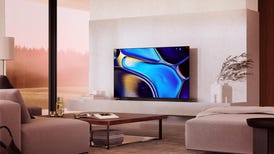
Digital television (DTV) may be either standard definition (SDTV) or high definition (HDTV). Most DTV-delivery services offer a mix of SD and HD channels. But you'd be crazy to limit your video display to SDTV, so we'll refer to sets as HDTVs.

What mode of DTV service will you use?
DTV is available via broadcast, cable, or satellite. To access over-the-air digital television, including HDTV, your screen or set-top box must have a DVB-T — that is, digital-tuner. Over-the-air analog channels require a PAL tuner. For cable and satellite, the only HD box announced so far has been the Foxtel iQ2, but Austar is expected to release its own in the next year.

Other source components
To view HDTV on disc, the best option is to buy a Blu-ray player, with the Sony PlayStation 3 the best option due to its ability to upgrade and add new features via the Net. HD-capable DVRs are available from some smaller manufacturers — plus TiVo is about to make its debut.

Connectivity
Don't buy a HDTV without at least one HDMI input for each of your high-def source components. Most TVs should have at least two nowadays. Avoid sets with the older DVI interface — it's digital, but not fully compatible with some sources. Second best is component video, a high-def-capable analog connection. S-Video and composite video are not high-def capable. An antenna-compatible set must have an RF antenna input.

Overview of connections for a typical HT set-up

In this section, you'll learn more of the details of the complexity of a well-equipped home theatre. It can seem daunting, but it helps to understand what's feeding the system, and the basics of how the components are connected.

HD components look clean and simple from the front. The depth of their connection possibilities is only revealed when you examine their back panels.

Connect through HDTV or through surround receiver?
There are two ways to organise your home theatre's nervous system. If you want the best possible sound quality, make a surround receiver the switching heart of your system. Connect all signal sources to the receiver, letting the receiver feed the TV and speakers. If you have only a few signal sources, and are not fussy about sound, you might omit the receiver and connect everything to the TV. But relying on the TV's speakers won't give you a true home theatre system — just a connected TV.

Placement
A video display should be placed far enough back to make the dotted pixels invisible. A surround receiver should sit atop the hi-fi rack for best ventilation. If it must go in the middle of a tall rack, to reach the other components, allow at least three inches (or about 8cm for metric types) of space above it.

Audio/video signal sources
To get TV programming, you'll need either an antenna, cable box, or a satellite box. To watch disc or tape, you'll need A/V source components. Note that if you want HDTV, you'll need an HD-enabled service or components.

Audio-only signal sources
While the HDMI interface handles both video and audio, audio signals from A/V components usually travel separately — via either digital or analog connections. A CD changer may use either type. Though some turntables come with a pre-amp on-board, most require a phono input or external phono pre-amp. Analog audiocassette decks need analog inputs and outputs to record and play. An iPod may connect via docking device or 3.5mm adapter cable.

Connecting to TV-delivery sources

In this section, we'll explore the ways to get many channels of DTV goodness into your system. TV-delivery sources may connect directly to the TV, to a converter/descrambler box, to a DVR, or to a combination of these things.

Antennas
Like digital TV in general, over-the-air HDTV is delivered mainly via the UHF band. Antenna signals are easily split to accommodate multiple TVs, DVRs, etc. Older TVs without DVB-T tuners may require a separate tuner box to support broadcast HDTV.

Examples of HDTV antennas.

Cable and Satellite
Your friendly local cable operator would prefer you to rent an HD-capable box. At the moment the two main providers are Foxtel and Optus, and these are only available in the eastern states. The iQ2 will be the only way you can access HD on cable come June.
Though there are several more satellite companies than cable, there are currently no locally available HD-capable boxes.

Digital video recorders
Most cable, and satellite operators all offer set-top boxes with built-in DVRs at a small extra charge. The iQ2 is also a DVR.

Topics: hdtv, home theatre, connectivity, a/v, television, hdmi, hd, tv, connect, set top box

Related Articles

Comments (11)

  • 2loud2hot commented on 14/09/2009 12:09 Report abuse

    Problem:When I listen to music for hour or so at a loud level, the amp shuts down. How can I connect another receiver or amp to run 1 set of speakers and let my AVR then divert rest if it's power to remaining speakers. Thus not causing it too shut down? I have a Yamaha RX-V 2500, not that I think that matters.

  • kym commented on 16/06/2009 10:36 Report abuse

    I just purchased a LCD TV and they said I don't need a converter box for it,but how do I connect it so it will pick up channels?

  • StaceyB commented on 10/06/2009 11:52 Report abuse

    can anyone help me? I need to connect the following components: TV, VCR/DVD Combo, Foxtel & HD STB

  • johntyrrell commented on 07/03/2009 12:26 Report abuse

    I am in an area where my signal is weak (harrington pk nsw) not able to get SBS or country channels.Do I need a stecial ant ?

  • Freddy commented on 25/01/2009 04:06 Report abuse

    Great article if you aren't actually going to connect anything.

  • Some one commented on 07/11/2008 11:56 Report abuse

    Oh FFS cant you include the frequency of each channel ???

  • Rg commented on 21/10/2008 07:01 Report abuse

    I have yamaha RX663BL, and I am not sure where I can connect the RF (from antenna) to the receiver.

    I wish I could connect it through receiver than connect it directly to TV.

  • aflewis commented on 06/08/2008 13:31 Report abuse

    Interesting arcticles, I have learnt today, it explains a lot to me. I know now why sellers seem to skip the info until you buy a unit

  • Eve commented on 18/07/2008 06:45 Report abuse

    Very good information. I am getting ready to purchase my FRIST HDTV and i don't know what i an doing. I will save your site as favorites for I know I will be back.

    Thanks ever so much.

    Eve

  • JohnDN commented on 05/05/2008 23:49 Report abuse

    Good summary article. Easy to follow. The only part I would question is the HDTV antennas. In Australia all DTV is transmitted over existing VHF and UHF frequencies, so a good existing analogue antenna will work.

Post your own comment

You must read and type the 6 chars within 0..9 and A..F

You must read and type the 6 chars within 0..9 & A..F

Submit

Enter your personal information to the left, or sign in with your Facebook account by clicking the button below.

Connect

The Explain Series

Must read