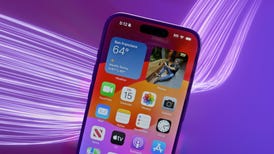
iPhone photography: Art or gimmick?
By Alexandra Savvides on 13 July 2009
Across the imaging community, a different type of photographer is emerging — the iPhoneographer. With all but the most rudimentary phones coming equipped with a camera these days, even a casual observer can become a voyeur of the everyday, a veritable Henri Cartier-Bresson in their own right.
(Untitled image by photozou.jp, CC2.1)
A photographer is no longer defined by the tools they use or the method by which they shoot — instead, it all comes down to the image. The move towards lo-fi photography is something that has slowly been gaining momentum for many years, and though it still remains a somewhat niche area of interest, the proliferation of lomography cameras as well as renewed interest in Polaroid has whetted many an appetite for a tool that is easy to use and instant. Enter the iPhone.
At the end of last year, the iPhone catapulted to the most popular mobile phone camera rank on Flickr, as well as trouncing many popular dSLRs from big name brands such as Canon and Nikon. Since then it has overtaken the most popular camera on Flickr, the Canon EOS 400D, and now sits on the Flickr charts as the second most popular camera.
The iPhone is the second most popular camera used on Flickr. (Credit: Flickr)
It's an interesting statistic because the camera itself (on the 3G model at least) is a bit of a curio, not known for its quality thanks to its lens with a fixed aperture of f/2.8, and the sensor is only 2 megapixels. The iPhone 3GS recently upgraded the camera specs to include a "tap to focus" functionality and an improved megapixel rating to 3, but not much else has changed.
Despite the relative limitations of the iPhone as a photographic device, it hasn't stopped leagues of amateur photographers from using their phones as pocket cameras. Entire communities are springing up around the concept, particularly on Flickr. Some photographers are even now known to use the iPhone as their primary tool — like Greg Schmigel.
Another is New York-based photographer Sion Fullana, who documents his daily travels around the city on his iPhone.
"The coolest girl in New York" (© 2009 Sion Fullana. Used with permission of Sion Fullana. All rights reserved.)
Sion says that there's definitely an art to taking photos with the iPhone even though some photographers might at first dismiss it as gimmicky. "For starters, I'm specialising in candid street photography. No poses, no permission asked. There are two ways of doing that: with a big telephoto lens from far away, or with the iPhone up close, where people think you're just texting or playing games, when in truth you are snapping away.
"On the other hand, there's the more 'artistic', almost painterly feel of the images you can get with the iPhone. Something about its small lens (of really great quality, beyond the lower resolution) allows the device to capture colours and light, if you know how to position the phone, with spectacular results. And finally, there have been several situations where I took the same portrait or scene with both my iPhone and my Lumix, and what you got on the phone was more interesting than in the camera ... crazy, but true."
The iPhone is not the first tool to prompt this phenomenon though, and it's certainly not without precedent: in 2004, fine art photographer Henry Reichold held an exhibition in London with photos shot entirely on a Nokia N93. Again in 2007, he participated in the "Nokia Connected Worlds" exhibition at the Royal Albert Hall, where he pieced together images taken on an N95 to create panoramas. In both instances, the relatively low resolution camera was used to great effect for artistic purposes.
"Man on the run", taken on an iPhone. (© 2009 Sion Fullana. Used with permission of Sion Fullana. All rights reserved.)
That said, not all photographers embrace this methodology. To many, using a mobile phone camera is something that's met with a relative amount of disdain and chagrin. It's not so much doubting the technical process (after all, point-and-shoots have been around since the days of 35mm film), but more about putting the act of observer, social commentator, even artist, into the hands of almost anyone who has a mobile phone.
Andrew Stark, a renowned Sydney street and documentary photographer who shoots on a 1980s Konica TC SLR doesn't think that a mobile phone will be replacing a stand-alone camera anytime soon — for a dedicated photographer at least. "My main issue wouldn't be the fact that it is a phone, rather the digital aspect of the device," he says. "I still shoot all my street photography on Tri-X film and don't particularly like the texture-less, thin look of digital black and white. So unless I could load a roll of 400-speed film into a Nokia I'd have to pass it up as a street tool."
"If you're serious about photography I think you carry a camera, the phone smacks of someone with a casual interest in the genre, or someone just looking for a gimmicky context (or an afterthought whilst stuck on hold)."
Manufacturers are certainly not seeing the camera as a gimmicky concept. The iPhone now has a 3-megapixel camera, but finding 8 megapixels or more on a mobile phone camera is fairly common, such as the LG Renoir. The megapixel convergence hasn't ended there either, with 12-megapixel camera phones such as Sony Ericcson's Satio appearing as working concepts set to be released at the end of 2009.
"The tree of the fallen leaves" (© 2009 Sion Fullana. Used with permission of Sion Fullana. All rights reserved.)
Other businesses have popped up specialising in iPhone camera mods. One of those, Factron, manufacture a special case and add-on lenses to turn the iPhone into a fish-eye or wide-angle lens with the right optics attached. Even the Apple Learning Interchange, a repository for online tutorials, has courses specifically targeted towards using the iPhone as a photographic tool.
Fullana says further to this: "I've heard [about] some backlash against the iPhone versus other phones. When some people see great photos taken with an iPhone, they jump promptly and complain 'sure it's great, but with Photoshop anyone can do that'. Then, on the good side, what I get is tons of comments like 'I can't believe this was taken with a phone'. 'The fact that this is an iPhone photo makes me love it even more' or 'No camera would have done it better'. Those make me feel proud of what I'm doing."
Regardless of the dialogue between camera photographer and phone photographer, it's interesting to remember that Polaroid was designed to be a disposable, cheap and readily available imaging format, and it still permeated the culture of "serious" photography. While the iPhone itself is definitely not as disposable as a Polaroid, the pictures certainly are — a simple swipe to delete and they're gone. If we're looking for a contemporary replacement for Polaroid, perhaps the iPhone is it.
While not wholly responsible for the paradigm shift in digital photography that's occurring, the iPhone certainly makes it far more accessible for phone users to dabble in the world of imaging, in most part thanks to the cultural phenomenon of the phone itself. There's still a long way to go before we could consider the iPhone and any other mobile phone camera as replacing a traditional compact, but it's testament to the theory that it doesn't take a whole stack of megapixels, or elaborate equipment, to make a photographer.
Been inspired to turn your hand to iPhone photography? Check out our tips for taking better photos with your mobile.
Topics: 3gs, camera, flickr, iphone, photography, street, iphoneography, photographer, phone
Related Articles
How to take photos on your iPhone or mobile phone
Camera phone buying guide
Compact cameras for advanced photographers
Best digital cameras of 2008
Comments (12)
-
Greg Schmigel commented on 25/07/2009 22:16 Report abuse
Excellent piece, Sion.
-
JoSchmo commented on 17/07/2009 20:51 Report abuse
When will this iPhone worship end??? Trying to defend its crap camera by saying it takes 'artistic shots' is scraping the bottom of the barrel... Pin-hole cameras, anyone? Sigh...
-
tim commented on 15/07/2009 18:49 Report abuse
@shane
"but to disregard a great image as "non photography" purely because it's come from a phone camera is shortsighted and pretty silly."
which is something he never said. He says HE wouldnt use it, because he likes the texture and feel he gets from traditional film, and that he doesnt think phones will be replacing DSLRs. And I would agree with him on the second point.
My issue with phonography is that the produce much more casual feeling images. the guy running in the street for example..whats special about that, in terms of composition, exposure, depth of field, focus, etc etc. To me, its just a happy snap of a guy running in a street. For me, producing a really good image should involve thinking about all of those things, and deliberately making each setting on your camera just so, in order to be able to capture the picture you are imagining.
I think of it in the same way as a multi axis cutting machine vs a traditional woodworker. They can both produce the same output, but one of them has used a range of skills to do it, while the other has just had a button pushed.
Of course, not to say that you dont also get alot of the same thing with DSLRs that are on auto mode, but my point is with a real camera you CAN do those things, which is why phonography doesnt carry the same weight with me. -
Wiebster commented on 15/07/2009 01:48 Report abuse
It's so funny to see how some people just don't want to see the fact that what we used to do in the darkroom, we now do in photoshop. And it's still a skill. A lot of photographers that still use the darkroom just can't handle photoshop. And that's logical, cause a lot of those people just don't have the skill and can't develop the skill for photoshop.
Stop bitching around that analog is better than digital. If you can't handle it, quit photography and spend your last working years as something else.
On topic: the iphone is great for giving your creative proces a new, fresh insight. All the photography apps help to be creative even more.
But offcourse, all my asignments, I still do with my dSLR and studio-equipmment ;)
Greetz, Wiebster. -
Shane commented on 14/07/2009 09:03 Report abuse
"So unless I could load a roll of 400-speed film into a Nokia I'd have to pass it up as a street tool." Look, there's art, and artists doing great things, but then there's ego, denial and arrogance. I bet any photo that Andrew Stark has taken could be taken with an iPhone and manipulation in Photoshop and completely reproduced digitally. Now being a old-school lover of photography myself, I can appreciate the skill and need that many people have to still shoot on film and process it themselves, one MUST feel connected to his craft (which digital may lack), but to disregard a great image as "non photography" purely because it's come from a phone camera is shortsighted and pretty silly.
-
Yew Nork Joe commented on 14/07/2009 04:40 Report abuse
I respond to interesting photos.
-
AdamB1234 commented on 13/07/2009 23:09 Report abuse
Is iPhone the new Lomo?
-
MoFo commented on 13/07/2009 19:13 Report abuse
Geez.. an article about using an iPhone as an actual camera? Do not want. Granted, the photos are really quite good for composition, but they could've been that much better even using a decent compact P&S, let alone a DSLR.
5 megapixel cameraphone or one of the 2 DSLRs I own... hmm, I wonder. Cameraphones are social toys. -
Kaaru commented on 13/07/2009 15:59 Report abuse
Sion is the best
-
BenS commented on 13/07/2009 13:54 Report abuse
Why do people always assume more Mp equals better quality photos? Manufacturers might be able to get 12+ Mp onto a sensor, but if the sensor is only tiny, it's not going to help matters, especially when the optics leave a lot to be desired. While a phone camera is a convenience for social situations and capturing images of opportunity, I can't see it ever replacing a 35mm full frame sensor or the like, which reproduce images a lot more accurately, especially when coupled with high precision optics.
Post your own comment
Enter your personal information to the left, or sign in with your Facebook account by clicking the button below.
ConnectThe Explain Series
-
Get (laptop) smart before you buy
Win the numbers game and get the laptop that's perfect your needs as well as your budget!
-
Microsoft Windows® 7. Your PC, simplified.
Windows® 7 has been designed to be more reliable, more responsive, and to make the things you do every day easier.
-
Whereis® maps
If you’d like to get to know more of Australia, and do it safely, then check out Whereis® maps.
-
Commonwealth Bank Mobile Banking
Bank anywhere, anytime. Learn more.
-
Nokia Navigation
The introduction of GPS adds a new dimension of 'social navigation'.
Must read
-
Best digital SLRs for beginners
With so many digital SLRs on the market today it's no wonder that the...
-
Compact cameras with HD video
Take your pick from our comprehensive line-up of point-and-shoots that...
-
Best budget digital cameras
Whether you're a beginner or a seasoned amateur, sometimes you just want a...
-
Nikon D3000
As long as you don't expect too many fancy bells and whistles, you won't...
-
Dyson Air Multiplier unboxing
We unbox the Dyson Air Multiplier and give it a quick run through to see...


3%
3%


More comments... 11 - 12