Kogan Agora Pro

By Alex Kidman on 04 May 2009

The Agora brings the concept of a low-cost netbook firmly back on the agenda, but its woeful wireless performance seriously detracts from its value proposition.

Editor's rating:6.3 User rating:8.3
  • Good: Inexpensive for a 10-inch netbook • gOS is highly capable
  • Bad: Build quality is average • Spotty wireless coverage • Updating kills wireless • Basic model is comparatively poor value
  • Specs: 160 GB • 2GB • Intel Atom • 1.6 GHz • See more specifications
  • RRP: AU$539.00

Design

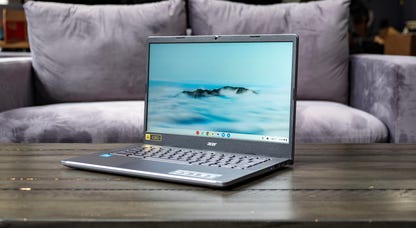
Kogan's Agora netbook doesn't break any real new ground in netbook design terms. You could even say that it looks like a prototypical netbook — black plastic abounds, with a small trackpad at the base and a very light chequered pattern on the back of the notebook. If you're the type of netbook user who doesn't like big flashy logos, the Agora models might appeal to you, as the Kogan logo is uncharacteristically small, nestled just below the 10-inch LCD screen. Our review sample — and from what we've seen of customer feedback on Kogan's own website, this appears to be typical — came with scant documentation in the box, only a power cord and a very tiny USB-based Bluetooth adapter.

Features

Kogan sells the Agora through its website in two configurations, the Agora and Agora Pro. Both feature 10.1-inch 1024x600 display screens, Intel Atom N270 1.6GHz processors, 160GB hard drives, Intel GMA 950 graphics and 802.11b/g Wi-Fi. The difference between the Agora and Agora Pro boil down to memory, battery and Bluetooth. The regular Agora comes with 1GB of memory, a three-cell battery and Bluetooth via dongle as a AU$10 premium option.

The Agora Pro — which was what we mostly used for our testing — has 2GB on-board, a six-cell battery — which Kogan rates for "up to six hours" of battery life — and the USB Bluetooth dongle in the box. The regular model retails for AU$499 plus postage and the Pro is AU$539 plus postage. You'd pay more than that difference for just a memory upgrade and as such we can't see much of a case for buying the regular Agora.

With three USB ports, memory card reader, VGA output and 10/100 Ethernet, the Agora and Agora Pro follow a very standard netbook recipe. There's also a solidly blocked modem port that's very evident (it sits next to the Ethernet port on the right-hand side), which just struck us as odd.

On the operating system side, Kogan's opted to travel down the Linux route, specifically with gOS, a Ubuntu derivative with a strong focus on Google applications and a look and feel that's very similar to Mac OS X. A dock-style program launcher at the base of the screen gives quick access to Firefox; Gmail; Google Calendar; Google Documents; Google Maps; Google Reader; Google News; Google Products; Google Finance; Blogger; YouTube; Pidgin Instant Messenger; Skype; and OpenOffice.Org 3.0 Writer, Spreadsheets and Presentations. Like we said, Google abounds, and this is a netbook with its head very firmly in the cloud.

Performance

We briefly tested a regular Agora model, but had some severe issues with our review sample, which Kogan quickly replaced. For what it's worth, the one upside with the regular model is that the three-cell battery fits smoothly into the bottom hinge, making the netbook more stable on desks and laps, whereas the six-cell battery bulges out and props the netbook up at an angle.

Both Agora models feature keyboards that span out to within only a millimetre or two from the side, which means they're full keyboards with fair spacing given to the individual keys. The overall feel of the keyboard is, however, a little cheap and rattly, with poor travel characteristics compared to slightly higher priced models from MSI or Asus, let alone the excellent keyboards that HP puts on its netbook lines.

We've noted before that one of the reasons why Kogan's stuff is typically cheaper is because the build quality can be a bit on the rougher side. The Agora isn't the most sturdy of netbooks out there, but it's easily the equal of most of the early Eee models for the most part. You wouldn't want to drop the Agora too much, and the keyboard is as noted not the best, but for the asking price it's a reasonable compromise.

The one area where the Agora Pro (and the earlier Agora we tested) let themselves down badly was in wireless performance. We struggled through pretty constant signal drop-outs throughout our testing period, while nearby netbooks, computers and consoles all merrily retained the same signal without a problem. This is especially an issue given the strong focus that gOS puts on Google's cloud-based applications, as it's fair to assume that most netbooks don't spend terribly long tethered to Ethernet cables, and good Wi-Fi is a must.

gOS itself is a pleasure to use for the kinds of tasks that netbooks are best suited at, and the initial offering of programs is well chosen. Again, though, the wireless came back to bite us, and in a rather unexpected way. Figuring that the wireless drop-out issues we were encountering might be related to older or poorer drivers, we launched the Synaptic Package Manager to bring as much of gOS up-to-date. Keeping your operating system up-to-date is generally a good idea from a security and stability standpoint as well.

Except that in the Agora's case, it isn't. Specifically, updating kills the wireless drivers outright, to the point that the system doesn't consider it has wireless hardware installed at all. More Linux-heavy types posting to Kogan's site have worked out how to recompile the drivers so they work post update, but for the average user not accustomed to Linux command lines this may as well be black magic.

Other netbook vendors who have opted for a Linux solution have generally used dedicated repositories to keep this kind of driver issue at bay, but the Agora just points to the general Ubuntu repositories. That's Kogan's decision to make, rather than hosting repositories to bypass the problem, but when we checked with Kogan representatives, they stated to CNET Australia that they were "trying to get this issue resolved now, but for the time being [customers] should not update from the repositories". That's hardly inspiring stuff.

Netbooks with six-cell battery packs generally last a good long while, and we were rather hoping that the bulge factor of the Agora Pro's would pay off in operating hours, but again our results were on the average side, with a full-screen video playback test conking out at the the 3.5-hour mark, well below the claimed six hours. The same test with the three-cell Agora battery sputtered out before the two-hour mark.

It's a huge pity the wireless is so flaky, as otherwise there's a fair amount to like about the Agora generally. Netbooks were at least initially pitched as a low-cost ultraportable alternative, but we've seen most netbook prices creep upwards at a steady pace, contrary to the way most technology purchases go. If Kogan can fix the repository issues, and improves the wireless, this could be a great netbook at an appealing price. As it is, a cloud-centric netbook with poor wireless performance is hard to recommend.

Topics: Kogan, agora, netbook, pro

Other Kogan products

Comments (11)

  • Sibron gave 10/10 on 08/09/2009 23:51 Report abuse

    • Good: Has OpenOffice pre-installed. prompt delivery. easy to use.
    • Bad: I have to buy another one, my wife wont let me take this one when I go out of town for work.

    It does everything I had hoped, word doc's, powerpoint and play movies. plus there are plenty of other programs pre-installed.
    Sent them the money sunday night(direct deposit) they got the money and sent it on tuesday, I got it on wednesday, nice work.
    my wife took it to uni, her mates couldn't believe it was only $470.00AUD delivered to our door(Perth)

  • Sibron gave 8/10 on 31/08/2009 02:11 Report abuse

    D, I have a Kogan 42" tv & 24" monitor. My brother has 3 Kogan tv's.
    He had Kogan phone him and ask for him to take one tv to his local repairer as the speakers might play up(never heard of Pioner or Sony doing that), I had my screen "flicker" while i read e-mails, contacted Kogan, and they bent over backward to find what the problem was. Turned out to be software (not Kogans).
    If you think you will get better service from an overseas company....good luck.
    Kogan is a small fish, and bad service would impact them much more than it would a large company such as MSI or ASUS
    Oh, btw, i ordered my Kogan netbook tonight :-), cant wait!

  • BirdBrain gave 8/10 on 28/07/2009 00:43 Report abuse

    • Good: Lots of RAM
    • Bad: Future eeePC onboard GPS sways me

    I am considering purchasing a Kogan Agora Pro.

    I am attracted to it's abundance of RAM so I can load my CHOICE of OS and applications to same (and sleep the HD). Extra RAM that extends the functional service life is a plus.

    As I read through the article I recognized there is a difference between "up to six hours" and subsequent "well below the claimed six hours" wording spin. I also understand that full screen video is not the design intent of netbooks. Under those conditions I actually have respect for 3.5 hours of run time.

    Others reviewers are not reporting wireless connection issues.

    The Kogan Agora Pro remains a finalist on my list.

  • anto gave 7/10 on 12/05/2009 11:54 Report abuse

    • Good: cheap, if you can ebay for
    • Bad: wireless, no 'fn' key on right side, bit heavy, runs hot, noisy fan

    I got lucky and got a 1GB&3cell model from ebay $410 inc shipping,
    installed ubuntu NetBookRemix with help from agoranetbook.kayno.net, rearranged keys to colemak no worries, 3cell lasts about 1:50.

  • tommyruff gave a review on 04/05/2009 20:08 Report abuse

    • Good: value for money
    • Bad: expected a little better from 6 cell battery

    Yes its cheap, and no complaints with the built quality just yet. This is probably not for the user that wants windows o/s out of the box and expects a user manual. No probs installing Windows 7 on this good performer and no probs with wifi.

  • Spludge gave 10/10 on 04/05/2009 17:27 Report abuse

    The modem port may be blocked off because getting a modem in a Chinese-designed product approved for Australia is not a cheap proposition, and for something with as short a model life as this, would probably be un-economical.

    Did the power pack at least have MEPS and RCM approval markings?

  • D. gave a review on 04/05/2009 15:31 Report abuse

    • Good: Cheap
    • Bad: You get what you pay for

    You're better of spending a little bit extra to get a MSI Wind. Build quality will be better, reliability will be greater and after sales service will be better

  • ?? gave 6/10 on 31/03/2009 16:51 Report abuse

    will it be available in stores ??

  • wolf gave 9/10 on 25/03/2009 12:38 Report abuse

    • Good: looks sweet

      good screen

      tough design

      2GB ram and bluetooth
    • Bad: maybe its not brand name who cares

    looks good i was gonna get anetbook but this was when there werent many and i got a satellite L300 wish id waited

  • tilius42 gave 9/10 on 16/03/2009 03:03 Report abuse

    • Good: bang for buck.
    • Bad: for the price it's all good.

    a no nonsense machine with Unix at a good price - well done!

Post your own

You must read and type the 6 chars within 0..9 and A..F

You must read and type the 6 chars within 0..9 & A..F

Submit

Enter your personal information to the left, or sign in with your Facebook account by clicking the button below.

Connect

The Explain Series

Where to buy Kogan Agora Pro

See all options »

Must read

Advanced search

Product finder

Recently viewed products