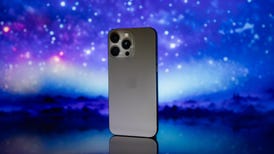
Will the iPhone 4 kill the compact camera?

About The Author

CNET Editor

Lexy spent her formative years taking a lot of photos and dreaming in technicolour. Nothing much has changed now she's covering all things photography related for CNET. You can find her hosting the weekly Pulse podcast.

Commentary: with the announcement of the Apple iPhone 4 and its improved camera specifications, this phone could have the potential to change the market for photographers and photographic manufacturers.

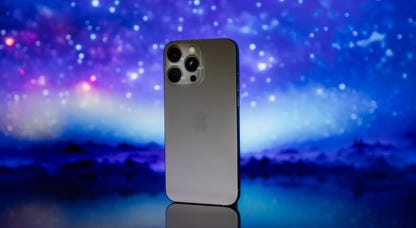
Apple iPhone 4

(Credit: Apple)

The original incarnations of the iPhone helped catapult an already strong movement for shooting with a mobile device, resulting in a phenomenon known as iPhoneography. With all the updates to the imaging capabilities of the iPhone 4 it's only natural to assume that this predilection will continue, as casual photographers eschew basic compacts for the all-in-one ease of a mobile device.

At the WWDC Keynote address, Steve Jobs even compared the iPhone to "a beautiful old Leica camera". Though he was referring mostly to the aesthetic of the device, this direct comparison to the imaging company and the positioning of the iPhone's photographic capabilities won't go unnoticed. Earlier this year, a Nokia executive made the bold claim that mobile phones would soon replace conventional cameras, including SLRs.

With all the improvements in the iPhone's camera, can other camera manufacturers offer enough points of difference to sway potential buyers to invest in two separate devices for their photographic needs?

The sensor

The iPhone 4 features a 5-megapixel camera, but more importantly it houses a backside-illuminated sensor (BSI), something that has only started to appear en masse on compact cameras this year. BSIs have key advantages over traditional sensors, including better low-light capabilities and the ability to capture more frames per second in continuous shooting. The momentum surrounding any Apple announcement certainly has the potential to accelerate the recognition process for this sort of technology in the minds of consumers.

Apple iPhone 4 camera

(Credit: Apple)

At the moment, there are only a few camera manufacturers that have these sensors in their range, including Canon's IXUS 300 HS, Nikon's P100, and Sony's TX1 and WX1. It's a technology that is available now but certainly not commonplace enough for its inclusion on the iPhone to be something that could be considered as Apple playing "catch up". In addition, though the megapixel count seems rather low in comparison to other 10-megapixel-plus compact models, most consumers won't be printing images larger than standard 10x15cm prints, if printing at all.

Then there's the inclusion of an LED flash on the iPhone, a feature that was one of the main reasons for using a standard compact over a mobile phone to take images in low-light situations.

Photo display

One area that the iPhone excels in is image display. The new 3.5-inch display on the iPhone 4 presents a much larger surface area to display photographs, certainly larger than the screens on other compact cameras, with notable exception of the Samsung ST5500 that has a 3.7-inch display. The screen resolution, at 960x640, presents a huge jump over the pixel count on entry-level compacts and even some expensive prosumer models.

Apple iPhone 4

(Credit: Apple)

Another strength is video recording. As it stands now, the iPhone is capable of 720p HD recordings at 30 frames per second; a specification that's pretty much on par with most mid-range compact cameras available on the market today and encroaches steadily on the territory of stand-alone camcorders. Video editing, as part of the iPhone iOS 4, is something that scarcely appears on compact cameras except in a very basic form. However, the storage capacity in the phone itself (16GB or 32GB) presents some limitations for keeping large video files.

The role of apps

This is undoubtedly the biggest advantage the iPhone has over compact cameras. Being able to apply effects and tweaks in-phone or in-camera increases the accessibility for many would-be photographers by removing the expensive barriers to entering the post-processing market (that is, apart from the initial outlay of buying the handset).

The ability for third-party developers to create apps for the platform also opens up the market to some extent, allowing others to create image effects and tools that would normally be limited or closed off to everyday photographers.

The downsides

The iPhone 4 certainly doesn't win on every account; compacts have the flexibility of zoom lenses and more importantly, faster optics. At this stage, the lens specifications for the iPhone aren't known and there's also the important ramifications of shutter lag, image processing times and general responsiveness of the camera, which is something that won't be known until photographers actually get their hands on the device. The iPhone also can't replace the most important aspect to this debate either: the photographer.

Naturally, the iPhone 4 can't compete with the flexibility of traditional SLR cameras, or indeed compact cameras with manual exposure controls. But it could be foolish for camera manufacturers to assume a customer in the market for a phone and a simple camera would choose to buy two devices rather than one that could do it all.


Add Your Comment 29


Post comment as
 

FotoFreak posted a comment   

Pocket / Still Digital cameras will always be superior to cameras built into the iphone, due to the lens, processor, engine, etc. Digital Cameras are designed purely for photos and usually have a lot more features and a cheaper price.

The camera in a phone is designed purely for convenience, not to replace a digital compact etc. I personally would prefer to use my Sony DSC-T200 8.1MP with Carl Zeiss lens, rather than a mobile phone camera, plus because its a separate device, I dont run the risk of the phone battery dying in the middle of a camera / video shot.


daryl posted a comment   

Reminds me of an episode of Get Smart where Max and 99 are off on a mission and they are issued with a radio which has a concealed camera and a camera disguised as a radio...

My 35mm format SLR camera has a 50mm f/1.4 lens which has a lot more glass that a phone lens. That's a big chunk of glass.

I recently read about a fluid filled lens which distorts when an electric charge flows through it and it can be made to focus and is small enough for phones and tiny cameras.


jizz posted a comment   

If you like it buy it! So if you like taking photos, go buy a real camera.


jb8967 posted a comment   

No, but the N8 will. With a sensor as large as any top digital compact, a full Xenon flash, WIDE ANGLE 28mm Carl Zeiss optics, face detection, 720p video with HDMI out, and a native application for editing...the Nokia N8 is a suitable replacement for pocket cameras with ultra-compact optics.


Gizmo posted a comment   

iPhone kill cameras... no way.
But the Nokia N8 will give them a good running, its best phone camera yet.
So if you want a camera that's a phone... get the N8.


pete posted a comment   

no, regardless of what brand of phone you like it does not take a rocket scientist to appreciate that the camera in the new iphone is not going to replace compact cameras. Let's break the article down.
The intro: - basic apple-driven hype combined with a ridiculous exaggeration of the improvements to the iphone's camera.
The Sensor: - more buzz. Sure, BSI improves photo quality in low light situation (2-fold better according to Sony [the guys that brought BSI to the mainstream about 2 years ago]) but that doesn't make up for the lack of pixels, plastic/small lens, lack of optical zoom or image stabilisation (although there may be an app for this, idk).
Photo display: - to say the display is bigger than (almost) any camera is absurd and irrelevant. People take photos to print, send or display at sizes much bigger than 3.7". Having a big display may help you see how good/bad the photo is you've just taken but other than that it's unimportant and almost never a deal-breaker when buying a camera.
The Role of Apps: - again, who cares? if the quality of the photos is low to start with, there's little any app can do to change that.
The Downsides: - a fairly scanty account to say the least but to point them all out would make the rest of the article redundant by answering the initial question with a resounding NO.

The bottom line is that the phones replacing cameras debate has gone on for a while, and while camera phones are definitely getting better and technology like BSI is a new and exciting addition; there are definitely better phone cameras available and buzz words like "iphoneography" do nothing to hide the obvious catch up situation apple finds itself in as far as developing a decent camera component to their iphone.


pete posted a comment   

no, regardless of what brand of phone you like it does not take a rocket scientist to appreciate that the camera in the new iphone is not going to replace compact cameras. Let's break the article down.
The intro: - basic apple-driven hype combined with a ridiculous exaggeration of the improvements to the iphone's camera.
The Sensor: - more buzz. Sure, BSI improves photo quality in low light situation (2-fold better according to Sony [the guys that brought BSI to the mainstream about 2 years ago]) but that doesn't make up for the lack of pixels, plastic/small lens, lack of optical zoom or image stabilisation (although there may be an app for this, idk).
Photo display: - to say the display is bigger than (almost) any camera is absurd and irrelevant. People take photos to print, send or display at sizes much bigger than 3.7". Having a big display may help you see how good/bad the photo is you've just taken but other than that it's unimportant and almost never a deal-breaker when buying a camera.
The Role of Apps: - again, who cares? if the quality of the photos is low to start with, there's little any app can do to change that.
The Downsides: - a fairly scanty account to say the least but to point them all out would make the rest of the article redundant by answering the initial question with a resounding NO.

The bottom line is that the phones replacing cameras debate has gone on for a while, and while camera phones are definitely getting better and technology like BSI is a new and exciting addition; there are definitely better phone cameras available and buzz words like "iphoneography" do nothing to hide the obvious catch up situation apple finds itself in as far as developing a decent camera component to their iphone.


Ross posted a comment   

I like the fact that when i turn on my camera it works straight away. But with the iphone it takes a while for the camera app to come up (missing the shot).


Chill It posted a comment   

woa woa , guys chill it, this aint any debate,just an opinion.


ihatehaters posted a comment   

What a good controversial question you people i so caught to it right over 50words LOL ...... same question as will compact cameras replace SLRs?...... how lame is this obviously the digital camera.... end of this..


Sponsored Links
Digital cameras

Recently Viewed Products